


Net zero grid upgrades drive a £200bn energy industry civil war
Net zero grid upgrades drive a £200bn energy industry civil war

Matt OliverThu, September 10, 2026 at 5:00 AM UTC
0

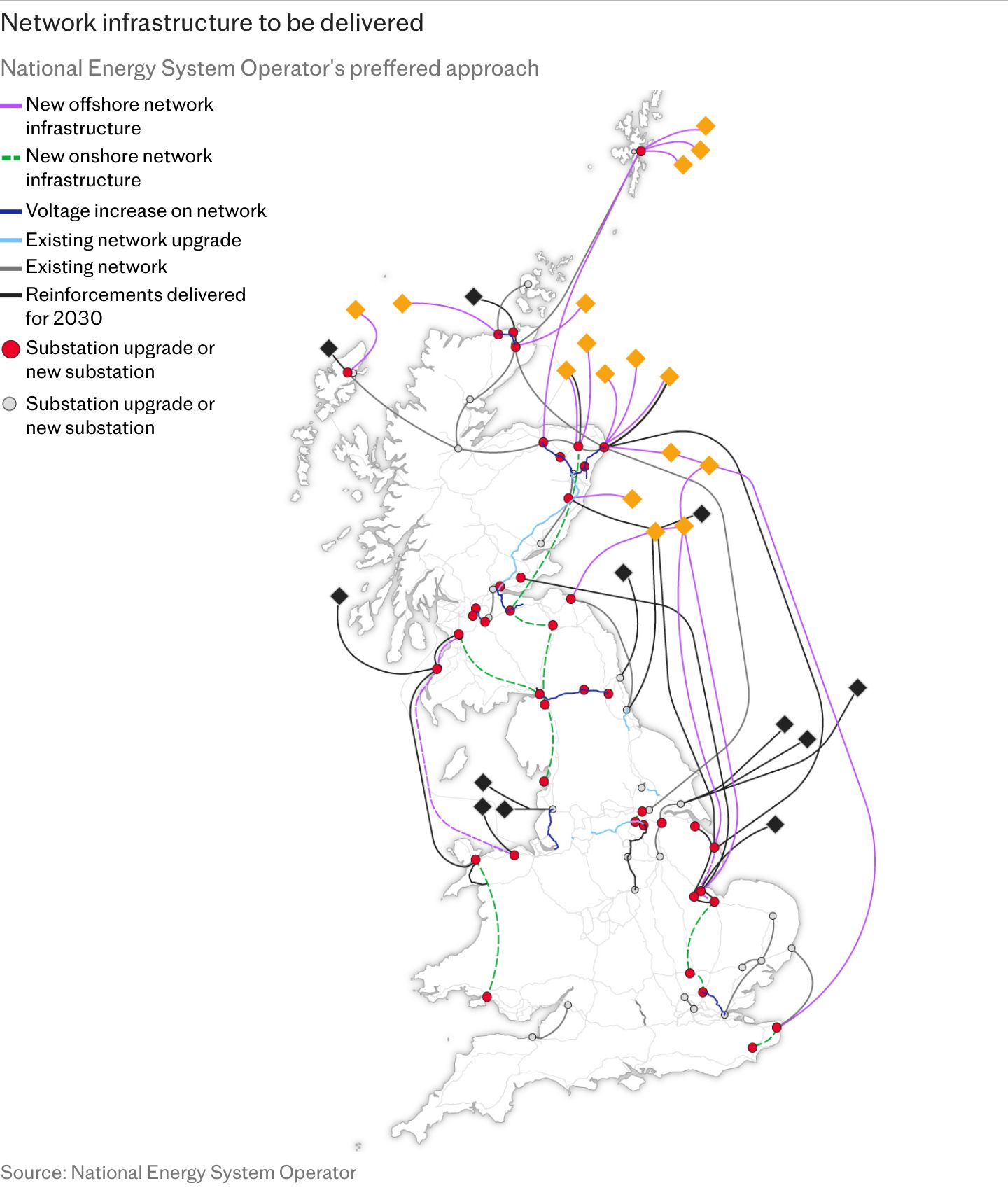
The subsea cable known as Eastern Green Link 1 will slip into the water at Torness, east of Edinburgh, before resurfacing near the coastal town of Seaham, County Durham.
It is often referred to as a “bootstrap” by energy insiders. But that doesn’t do the project’s scale justice.
Developers say that by 2029 the 120-mile electricity “superhighway” will help unlock Scotland’s renewable energy reserves by transporting enough power for two million homes southward.
At an estimated cost of £2.5bn, it is probably one of the most expensive infrastructure schemes you’ve never heard of – perhaps because it lacks the visibility of a railway, road or bridge.
Yet amid severe delays and escalating costs, Eastern Green Link 1 and schemes like it are now beginning to attract more attention.
The cable and its sister project, Eastern Green Link 2, were originally meant to cost a combined £3.4bn, a figure that has since doubled to an estimated £6.8bn.
Elsewhere, some grid-improvement schemes have already seen their projected budgets balloon by nearly 500pc.
Against the backdrop of a wider £200bn upgrade under way across Britain’s power network, critics fear that it risks becoming a fresh HS2-style fiasco for the Government, with millions of households and businesses left to pick up the tab.
“This is going to make HS2 look like a slick, well-executed operation,” one worried energy industry source says.
Sam Richards, the chief executive of Britain Remade, a clean energy pressure group, adds: “The simple truth is that Britain is building too much grid, at too high a price.”
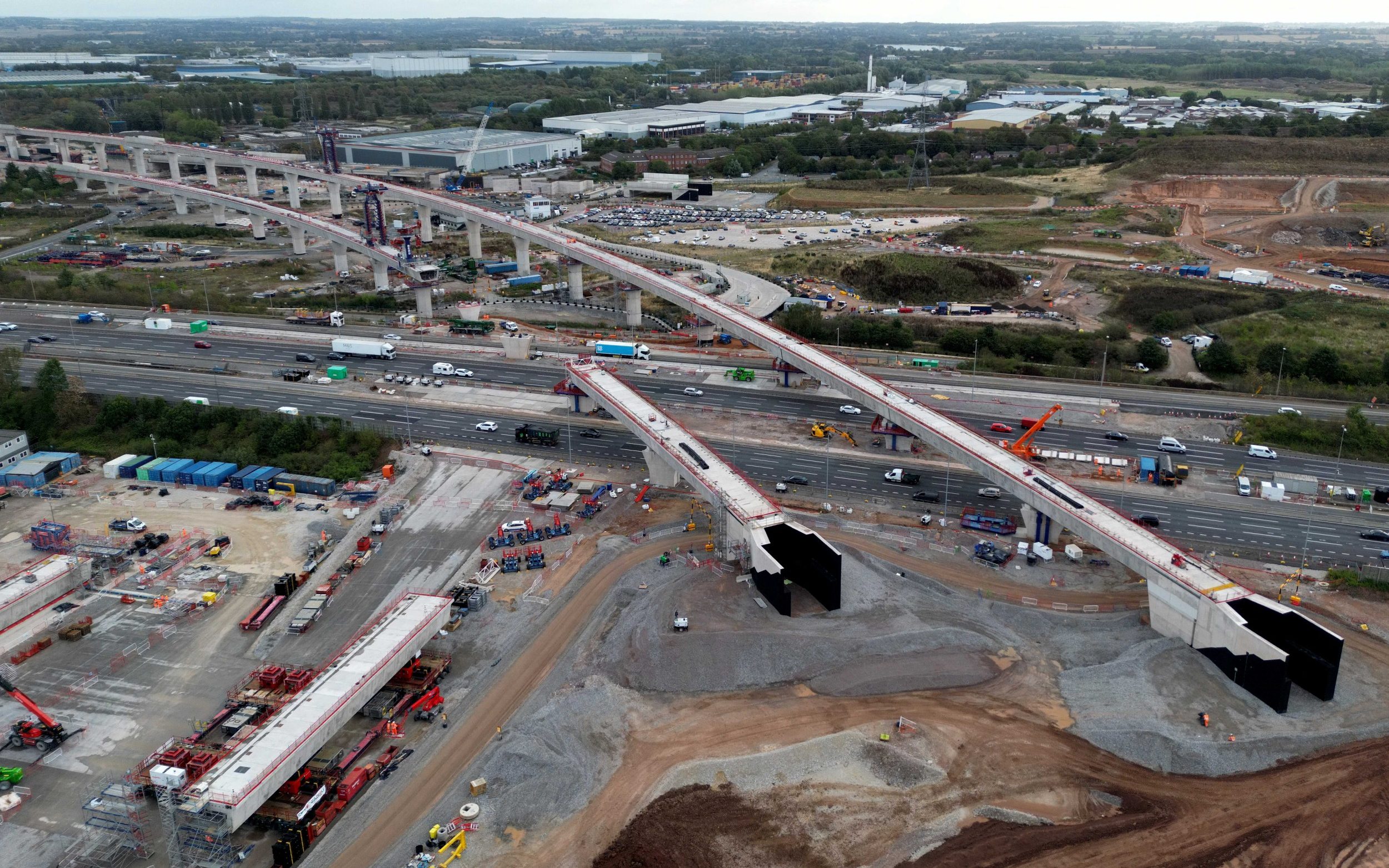
Critics fear that the £200bn upgrade under way across Britain’s power network risks becoming a fresh HS2-style fiasco for the Government - Paul Ellis/AFP via Getty ImagesSqueeze on household bills
Britain’s power grid is an engineering marvel. It spans 530,000 miles of cables, including some 10,000 miles of high-voltage transmission lines – the motorways of the system – and another 520,000 miles of lower-voltage distribution networks that carry power to people’s homes.
It was largely built through the 1950s, ’60s and ’70s and designed to manage power for a highly centralised system that depended on a relatively small number of coal-fired and nuclear power stations.
But to reach net zero carbon emissions, significant changes are required.
In a system dominated by renewable-energy generators, such as wind and solar farms, the network will instead rely on a large number of smaller power plants scattered across the country.
Along with a need to modernise infrastructure, the “great grid upgrade” set in train under successive Labour and Conservative governments is driven largely by net zero.
In total, it is expected to trigger more than £200bn of investment across distribution, transmission and interconnectors between this year and 2040, according to consultancy Baringa.
This includes £68bn alone to expand the UK’s transmission grid, the high-voltage cables that carry power over long distances to cities.
Households and businesses ultimately pay for all this work through their energy bills, which are rising to fund it.
According to tracker website Electricitybills.uk, the network component of a typical household’s bill is on course to have risen by 65pc, or from £207 to £342 per year, between 2025 and 2030.
Contrary to the oft-repeated mantra of Labour ministers, this means network charges, rather than volatile gas prices, are currently the biggest driver of domestic bill increases.
At the same time, modelling by SQE Energy suggests most industrial and commercial businesses face increases of between 60pc and 90pc in transmission network charges over the next few years.
“If you put it all together, including new expenditure and what you have to spend on ‘catch-up’ refurbishment of assets that should really have taken place previously, it’s a huge number – probably our biggest infrastructure undertaking as a country at the moment,” says Nick Forrest, a partner at Baringa.
Yet despite the vast scale of spending – and the outsized impact it is having on bills – energy suppliers including EDF and Octopus Energy say the grid upgrade programme has been rammed through with little scrutiny or regard to the costs it will impose on their customers.
One reason they are concerned is that polling shows consumers will probably blame them – rather than grid companies – for the ever-growing bills landing on their doormats.
But like HS2, there are also concerns about complicated regulatory processes.
“It’s f------ impenetrable,” complains one executive at a major energy company.
“You have to live and breathe this stuff to really understand it. We weren’t happy with the way it was pushed through.”
Another insider described it as “opaque and undemocratic”.
And what is now ringing further alarm bells is a string of delays and cost increases that threaten to push the cost of the grid-upgrade programme even higher.
Along with the Eastern Green Link cable schemes, several major projects are reporting surging cost inflation.
For example, a report quietly published by Ofgem in May revealed that a string of eight projects being built in Scotland by SSE were forecasting total cost increases of 284pc on average.
This included a staggering 467pc projected cost increase for work to upgrade transmission lines between Loch Buidhe and Spittal.
Ofgem has not disclosed the potential cost of the overruns in cash terms, or what their impact could be on bills.
But the available figures are not encouraging.
Another one of the eight projects is a high-voltage subsea cable between Spittal and Peterhead.
The exact cost of this individual link remains guarded, but SSE recently awarded a mammoth €2bn (£1.7bn) combined contract to Danish manufacturer NKT to supply cables for both the Spittal-Peterhead route and a separate Western Isles link.
Ofgem analysis reveals the Spittal-Peterhead scheme’s estimated overall budget has increased by 111pc since initial projections.
This has led to the watchdog allowing SSE to spend more on early construction costs, but it is still deciding whether any further increases are reasonable.
Crippling production bottlenecks
The regulator has said it will “rigorously challenge” all cost rises, but its past record is weak and experts fear it will have little grounds to challenge companies for higher spending that is being driven by external factors.
“There are lots of factors in the control of the transmission and distribution companies, but there are also quite a lot of things outside of their control, from the time it takes to get planning approvals to global supply chains,” says Baringa’s Forrest.
For example, Ofgem announced in 2022 that the Eastern Green Link 1 and 2 projects would cost a combined £3.4bn.
But when the developers of the scheme went to the market to secure the materials and services they needed, they found the costs were far higher than expected.
Ofgem was reluctantly approving a budget of £4.3bn alone by 2024 for Eastern Green Link 2 – after managing to find just £67m of spending it deemed unnecessary.
The surging costs have been blamed on the global rush towards renewables, which has sent prices for grid equipment surging as countries around the world all try to buy the same things at once.
According to the International Energy Agency, the cost of cables and transformers surged 91pc and 72pc higher between 2019 and 2024, with manufacturers also taking longer to deliver as they battle production bottlenecks.
Any kind of delay is a nightmare for developers, because it forces them to pay contractors for longer or spend more on storing equipment until it is needed.
But understanding exactly what is driving costs can be difficult because of a paucity of publicly available information, says Ed Hezlet, an energy expert at Onward, a Right-leaning think tank.
In many cases, National Grid and other companies are allowed to keep the finances of individual schemes hidden because they are deemed “commercially sensitive”.
“There’s evidence that costs have shifted up very significantly since 2022, but it’s hard to really know what’s going on,” Hezlet says.
“That’s worrying, because if you take the HS2 analogy, you definitely want to find out if something’s massively running over budget early rather than later – so you can actually talk about it properly and address it.
Advertisement
“Ultimately, billpayers are going to be footing the bill for all of this. So there should be far more transparency about both the cost and the progress of these projects.”
‘Limited amount of information’
EDF, one of Britain’s biggest energy suppliers, has also warned that there is currently a lack of transparency about both the scale and cause of the cost increases, not all of which can be pinned on inflation alone.
The company claims it is “impossible” to fully assess how bad things are based on “the limited amount of information available”, but adds: “There has been substantial supply chain cost inflation over the past few years, and this is likely to continue as countries across the globe tackle the same electricity network and generation challenges.
“We estimate costs have risen two or three times since initial transmission operator forecasts. This is corroborated by our own experience of connection cost increases for our generation projects.”
At the same time, it says, generators seeking to connect to the grid are facing average delays of two years – meaning the extensive upgrade work being undertaken may not actually be needed as quickly as thought.
Taken together, EDF and others argue this should prompt a rethink about whether the money being spent on grid projects is still good value.
“If we want to change direction, now is the last moment where this is possible without creating significant sunk costs, or delaying projects that are much-needed within the system,” EDF added.
In response, the Energy Networks Association lobby group insists the upgrade will deliver value for money.
In fact, Lawrence Slade, the group’s chief executive, says: “Network investment is supporting the connection of more affordable and reliable homegrown energy – it is an ongoing process that is creating thousands of jobs today, strengthening our long-term energy independence and ensuring customers will save on their bills in the future.
“Ofgem has stated that transmission network investment is expected to lead to around £80 of savings for bill payers by 2031 compared to not investing, which means bills are expected to be around £30 lower than they would have been had investment not been made.”
An Ofgem spokesman added: “While upgrades will requires upfront investment, failing to invest would also increase costs for consumers through higher constraint and balancing payments caused by grid bottlenecks.”
But just how far behind is Britain’s “great grid upgrade”?
Some of the best clues come from documents published by the National Energy System Operator (Neso), which is tasked with managing the grid day-to-day.
Of some 90 projects deemed essential for Labour’s clean power target, 64 have delivery dates falling after the all-important year 2030.
Among them is Eastern Green Link 2, which Neso says is needed by 2029. Instead, it is not on course to connect until December 2035.
Similarly the Beauly-Denny upgrade in the Highlands is needed by 2029 on Neso’s own numbers, but has substation works attached to it dated as late as November 2036.
The Telegraph sent questions to the Government, Neso, grid companies and trade bodies at the heart of the grid upgrade asking about the surging delays, cost overruns and the effect on bills. All refused to give detailed answers.
Kayte O’Neill, the chief operating officer at Neso, insisted that documents published by the quango did not represent a “Clean Power 2030 delivery tracker”.
However, she admits that delivering a decarbonised grid by 2030, the political target demanded by Labour in 2024, is proving challenging.
“Neso has consistently advised that delivering clean power by 2030 is a significant challenge,” she says.
“Achieving it will require cross-sector collaboration, including accelerated delivery of critical network infrastructure from transmission owners, implementation of connections reform and continued coordination between industry, government and Ofgem.”
A spokesman for the Department for Energy Security and Net Zero said: “We are reversing decades of underinvestment in the grid, alongside the private sector, to build an energy system that can bring down bills for good.”
Chris Bowden, the chief executive of SQE Energy, a supplier that manages grid connections for businesses, says the cost overruns and delays were already showing up in the data.
He argues that the cost of reaching Labour’s target in just four years will be huge – especially for industry and business, which are largely unprotected from price rises.
Bowden says: “On bills, the domestic impact gets most of the attention, but the industrial and commercial side is larger and less discussed.
“Our modelling suggests most industrial and commercial businesses face increases of 60-90pc in transmission network charges over the next few years.”
The chief executive adds: “One client’s charges are set to more than double to over £17m by 2029.”
With such substantial cost increases coming down the pipeline, some critics now argue that the Government should press pause on major grid spending until it can be sure everything planned is needed.
For example, Greg Jackson, the boss of Octopus Energy, Britain’s biggest energy supplier, has argued that new technologies, such as AI and dynamic line rating, which can help to squeeze more capacity out of existing power lines, should be exploited fully before consumers are tapped for costly upgrades.

Greg Jackson has urged Labour to cut spending on the electricity grid instead of bailing out consumers - Charles McQuillan for The Telegraph
He has also argued that major market reforms, such as switching from Britain’s current national electricity pricing system to a series of smaller, more localised markets, could remove the need for such massive works by forcing energy companies to be more efficient.
This is because energy producers will be encouraged to build out power suppliers in different parts of the country to support local markets, removing the need to transport energy from north to south.
In an interview with The Telegraph this year, Jackson suggested that this change could invalidate tens of billions of pounds currently set to be spent on grid upgrades.
A report produced this year for Octopus by FTI Consulting, a lobbying group, suggested that moving to locational pricing would render between £22bn and £30bn of planned transmission upgrades unnecessary.
This would potentially unlock between £55bn and £73bn in consumer bill savings between 2030 and 2050, it said.
Richards, at Britain Remade, agrees. “The way to reduce the amount of grid infrastructure that’s needed is by switching to local pricing.
“By cutting bills where the power is generated, more will get used at source, cutting the amount of wires and pylons needed.
“On top of this, planning delays, vexatious legal challenges and excessive regulation on new energy infrastructure is driving up grid build costs.
“Continuing to reform the planning system is essential if the Government is to deliver on its pledge to reduce energy bills.”
Doing so, he argues, will be essential if Andy Burnham, the Prime Minister, is also to meet his promise to put more money into voters’ pockets.
Onward’s Hezlet also fears that failing to reappraise grid costs now could have painful and long-lasting consequences.
“There’s good reason to be concerned because this stuff is basically going to be locked into our bills for 45 years,” he says.
Chris O’Shea, the boss of British Gas owner Centrica, is also concerned.
He argues that Burnham should consider moving more of the grid upgrade costs off bills and into general taxation – a prospect that may have little appeal as John Healey, the Chancellor, grapples with existing black holes in his Budget.
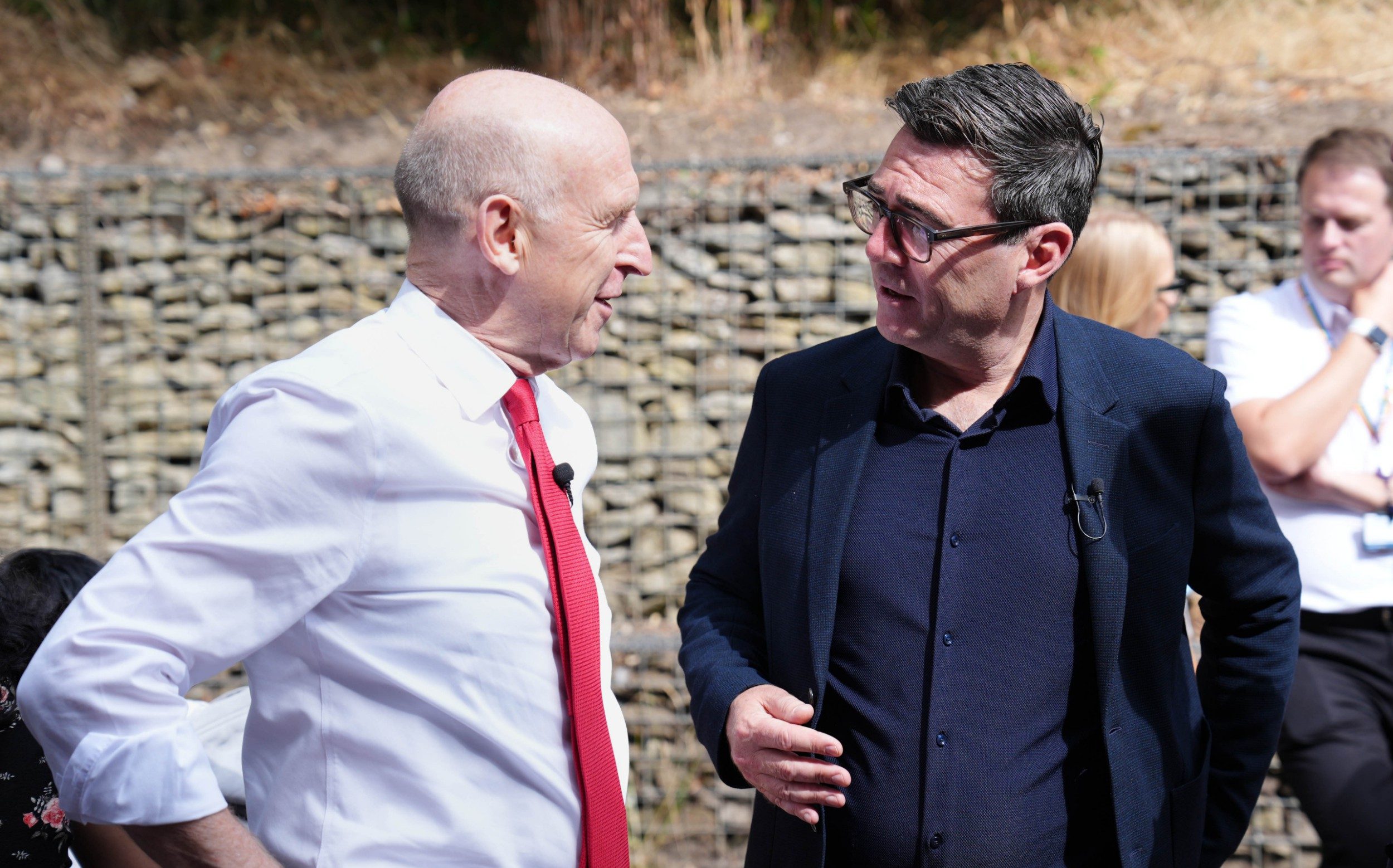
Andy Burnham (right) and John Healey have not ruled out raising taxes in their first Budget next month - Annabel Lee-Ellis/WPA via Getty Images
“Upgrading Britain’s energy networks is essential if we’re going to build the low-carbon, secure energy system the country needs,” O’Shea says. “But we must be honest about how that investment is paid for.”
The boss of British Gas adds: “Loading too much of the cost onto bills risks putting more pressure on households and making life harder for businesses, particularly smaller firms that are the backbone of the economy and already facing tough conditions.
“Major infrastructure investment is best funded through general taxation, which is fairer, more transparent and better reflects the national importance of these upgrades.”
So far, however, ministers have proved reluctant to back down on their grid spending splurge.
Miatta Fahnbulleh, the Energy Secretary, said in a recent radio interview with LBC that the upgrade work was a necessity.
“I don’t think, if we did not invest in the infrastructure of our energy system, anyone would forgive us,” she said.
“It is not a choice to make sure that we are upgrading our energy system. We absolutely need to do that.”
As bills surge, households are unlikely to forgive Labour for the alternative either.
Source: “AOL Money”
