


Prudish audiences are taking the sex out of cinemas
Prudish audiences are taking the sex out of cinemas

Robbie CollinThu, August 13, 2026 at 3:56 PM UTC
0
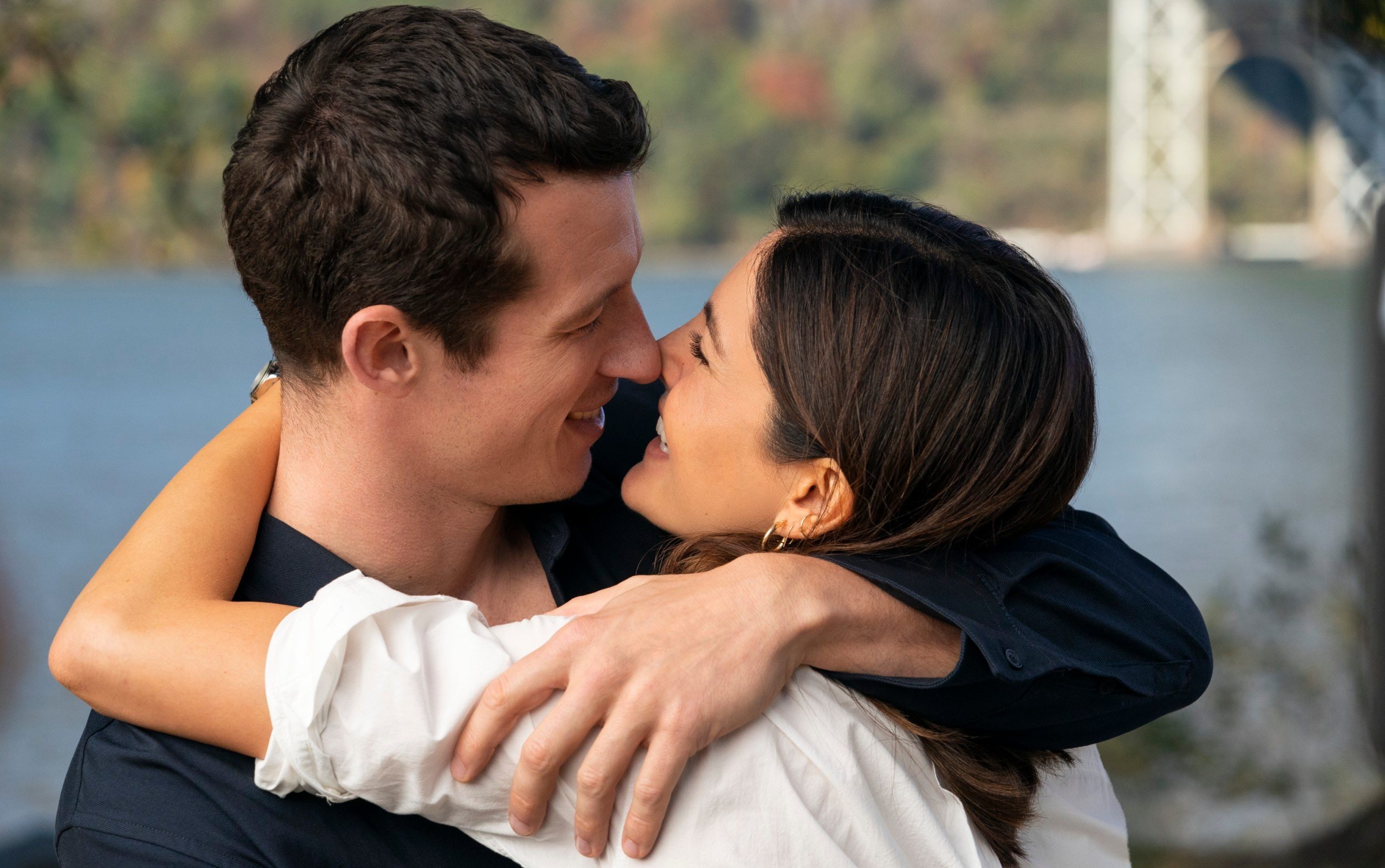
Director Will Gluck says he had to cut nudity scenes from his upcoming film One Night Only after early audiences complained - Universal Images
When director Will Gluck test-screened his new film One Night Only – a romantic-comedy riff on the Purge horror franchise, in which premarital sex, rather than crime, is legal for a single 12-hour period per year – he expected its premise to raise eyebrows. What he did not anticipate was that his audience would be so rattled by the sex itself.
In a recent interview with Variety, Gluck said that he ended up cutting “so much nudity” from the film after early audiences groused that it was taking them out of the story.
“You’re engaged in the characters and what’s going on, and then you pan over and there’s two naked people having sex, and you watch the audience… it’s a physical thing,” he explained. “They turn to who they’re with and… the benefits do not nearly outweigh the negatives of it.”
Cinema-goers of the 1970s, who flocked to the straightforwardly pornographic likes of Deep Throat, The Devil in Miss Jones, Caligula and multiple Emmanuelle, would be perplexed. Who watches a film that is literally about people having as much sex as possible in a short period of time and complains there is too much sex in it?

Cinema-goers flocked to Deep Throat in the 1970s - Bettmann
“Gen Z” is the obvious answer – though Gluck (who also noted he had seen “long pages of empirical data” confirming the trend’s legitimacy) was careful not to pin the blame on today’s reputedly hyper-prudish youth. The shift, he said, cut across all generations, who had come to understand mobile phones and laptops as the natural habitat for such material, as opposed to the multiplex. “Whenever people now see nudity or very adult situations in a big theatre, they get uncomfortable,” he added.
Gluck is on to something here – but the soaring prevalence of online porn only tells half the story. Since 1999, the British Board of Film Classification (BBFC) has surveyed the public every four to five years to ensure its guidelines align with society’s views at large, and their data complicates the easy picture of sleaze-raddled boomers, conflicted millennials and puritanical teens.
In their surveys from 1999 and 2005, the BBFC found that audiences were relatively relaxed about screen sex, and panels recommended that, if anything, the rules should be slightly loosened. Frank sexual content was widely thought permissible in 15-certificate films, provided it occurred within loving relationships, while still more explicit imagery could sit comfortably in an 18, provided it was justified by context. By 2005 – one year after the release of Michael Winterbottom’s 9 Songs, which contained a whole smorgasbord of un-simulated bedroom activity – it was commonly agreed that adults had a right to see “real, graphic sex” in film.

Michael Winterbottom’s 9 Songs contained a whole smorgasbord of un-simulated bedroom activity - Duck Season
The turn came in 2013. For the first time, parents expressed widespread concern over “sexualisation” and the “normalisation” of sex, due to the growing accessibility of online pornography. By 2018, those concerns had grown, as films began to adopt the porn industry’s grisly terminology and glossy-slash-grotty aesthetics. By 2023, respondents’ concerns now extended to more mildly raunchy material that had previously been deemed suitable for 12s and 12As: sex was a matter for the over-15s, and shouldn’t be dangled before anyone younger than that.
Simultaneously, even films marketed as erotic often fell shy of yesteryear’s bare-it-all mores. For every Babygirl or The Housemaid or No Hard Feelings – all of which featured what the BBFC categorises as “sexualised” or “full-frontal” nudity – there was a Bottoms or The Invite, sex comedies that featured plenty of “comic” and “strong” sex references, respectively, but nothing of the act itself. Even the most recent American Pie film, 2020’s Girls’ Rules, contains what the BBFC report describes as “multiple scenes with sight of sexual activity, however there is no nudity in these sequences”. Gluck’s long pages of empirical data have clearly been circulating.
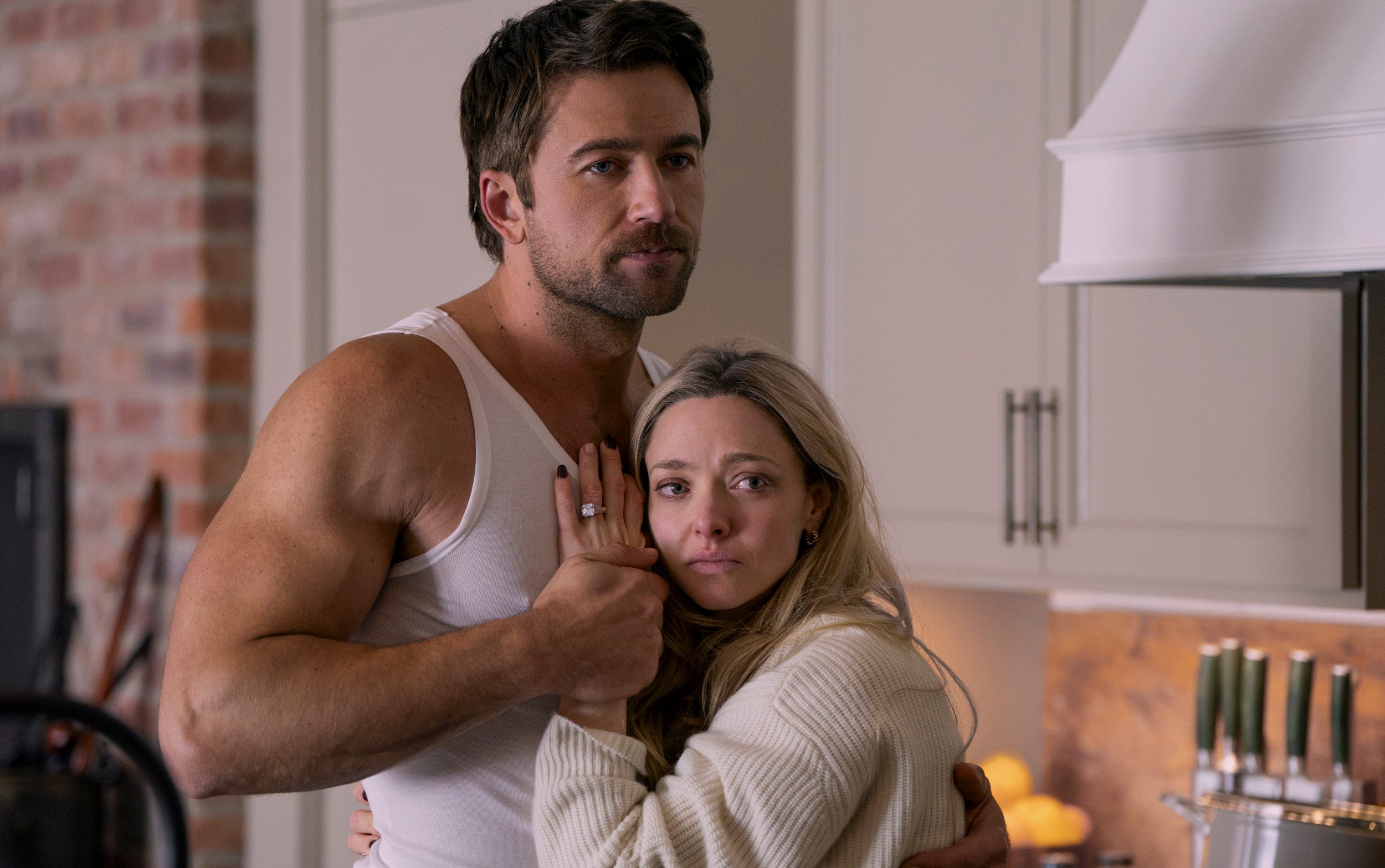
2025’s The Housemaid features what the BBFC categorises as ‘sexualised’ or ‘full-frontal’ nudity - Daniel McFadden/Lionsgate
“Audiences aren’t simply more cautious than they were 20 years ago,” David Austin, the BBFC’s chief executive, explains. “They have become more protective of younger viewers as the context they’re growing up in changes… that is why we consult thousands of people across the UK every few years, to make sure our guidelines accurately reflect what parents and audiences expect today.” And with explicit content now easily accessible online, the potential impact of sexual material on young people’s perceptions of and expectations around sex in the real world has us all on high alert.
Even so, one might expect the adolescent libido to offer some pushback. Isn’t there an appetite among younger cinema-goers for the 2020s version of American Pie, Porky’s or Revenge of the Nerds?
Absolutely, says Sian Barber, an expert in film censorship and controversy at Queen’s University Belfast – but that audience has to wrangle more cultural baggage than ever before.
Advertisement
“A lot of the sexier films that traditionally fell into that 15-rated bracket play very differently now than they once did,” she says. As a particularly stark example, she offers Pretty Baby, a 1979 drama in which Brooke Shields plays a 12-year-old child prostitute, which the BBFC certified at X – i.e., suitable for anyone 16 and over – on its original release. (It was re-certified at 18 in 1987 and again in 2007.)
“While there’s a lot in that film that is now unbearably disturbing, it’s not especially graphic,” Barber says. “Rather, it’s because of the changes in how we think about age and consent.”
That means even considerably milder material now leaves a sour taste because of societal shifts that have little to do with Hollywood. “If you look at material from the 1970s and Eighties, like the John Hughes teen comedies, there are so many jokes about date rape: ‘I’ll just slip her some of this’ and so on,” says Barber. “The films are the same as they always were, but the ways in which younger audiences understand what’s going on in them has changed.”
Babygirl explored themes such as power dynamics and age gaps
Barber suspects that Gen Z’s discomfort around even consensual sex scenes stems at least in part from the recent discussions around exploitation in the film industry, from a growing perception of on-screen nudity as pandering and naff to the more serious backstage predations of MeToo.
As recently as 25 years ago, a topless scene involving a popular actress would have been cause for uncomplicated cheer. “But today young people are more liable to think ‘hang on, why is it always boobs?’, or ‘did they use an intimacy coordinator?’, or ‘I can’t believe they’re doing that girls’ changing room cliché again’.”
That these conversations began around the turn of the millennium makes the 1999 teen-sex comedy American Pie a fascinating artefact. The jokes about male sexual humiliation have aged well; the rather contrived female striptease sequences less so.
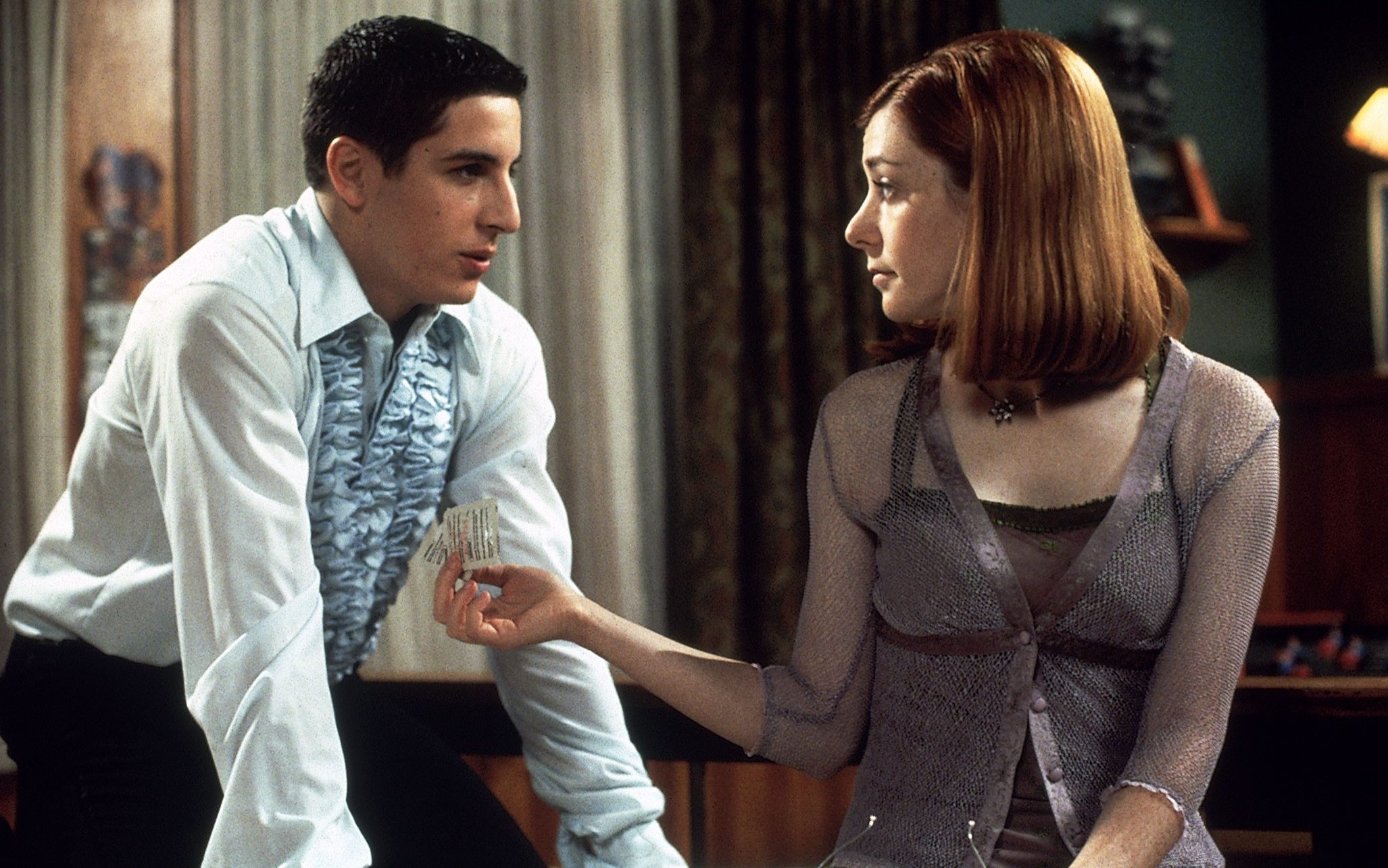
American Pie’s jokes about male sexual humiliation have aged well; the rather contrived female striptease sequences less so - Still – American Pie
What’s more, thanks to the rise of social media, these conversations are now often taking place before the film in question has been released. “In the old days, people would go to see a film then retire to the pub and share their opinions,” says Barber.
“But now, before they even book their tickets, they’ve seen TikToks about it, heard influencers talking about it, combed through viral festival coverage on Letterboxd, and read about any potentially problematic or controversial material online.”
The boundaries of the conversation have been pegged out in advance around online moral codes – and rather than coming up with a personal take, Gen Z viewers just have to work out where (or whether) to weigh in.
Yet Barber notes that her own Gen Z students are often far less troubled by certain types of edgy content than she expects. After a class screening of This Is England, for instance, “they were less concerned about the racism than the fact Shaun (the 12-year-old aspiring skinhead played by Thomas Turgoose) was being groomed by a gang, as well as the four-year age gap in his relationship with Smell.”
In other words, the whole field is in flux. Who knows whether, in 25 years, One Night Only will look cringingly priggish or gratuitously lewd?
But after all, as Barber observes: “Sex itself is messy, awkward and bizarre.” It stands to reason that our feelings about it on screen would be the same.
Source: “AOL Entertainment”
