


Why Christopher Nolan's 'The Odyssey' still has a women problem
Why Christopher Nolan's 'The Odyssey' still has a women problem

Clare Mulroy, USA TODAYMon, July 20, 2026 at 10:30 PM UTC
3
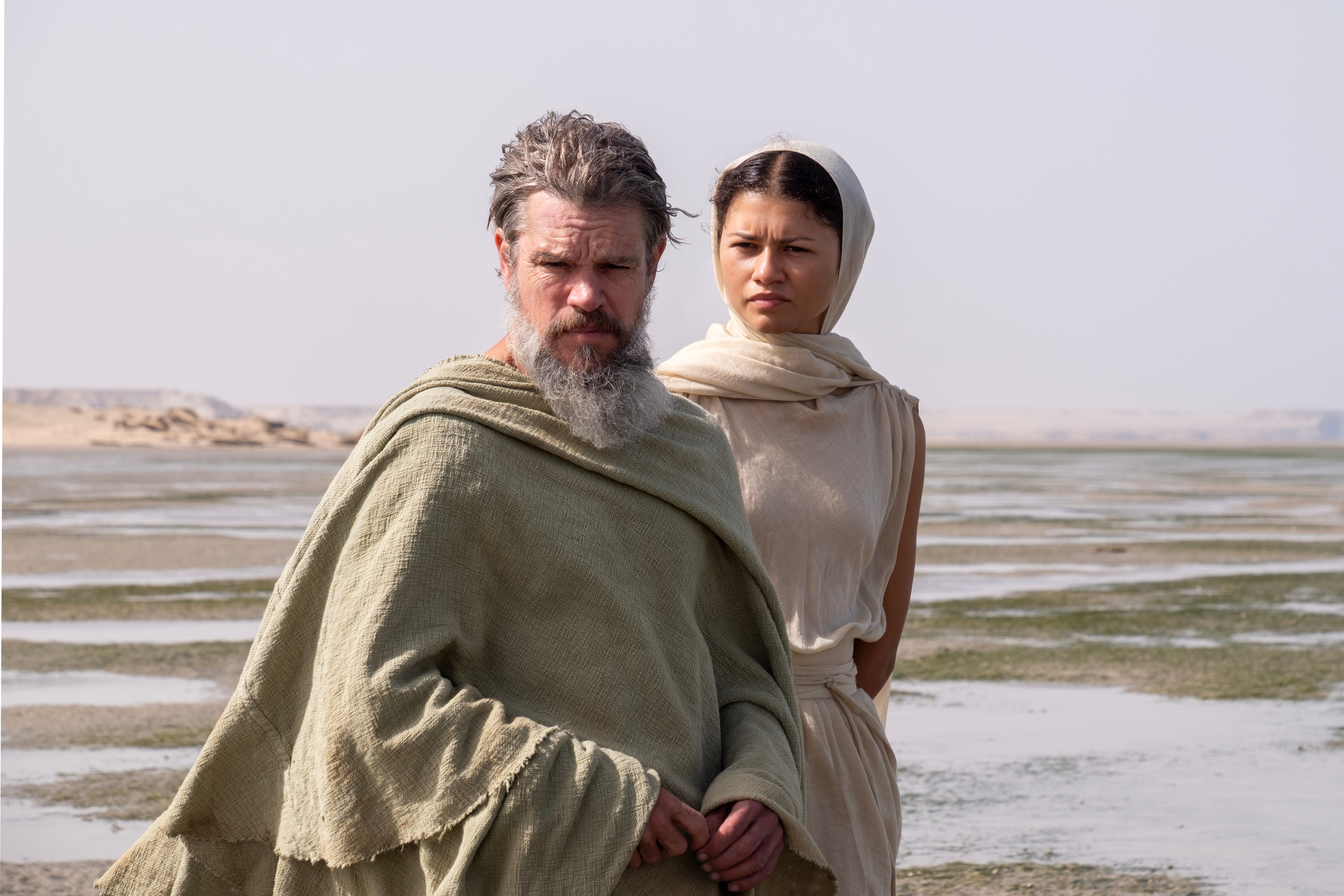
One man on a quest far from home. That’s the plot summary of many a Christopher Nolan movie.
In “The Odyssey” (in theaters now), Nolan employs a slew of Hollywood’s brightest leading ladies, including Zendaya, Anne Hathaway, Charlize Theron and Lupita Nyong’o. Yet like most other Nolan films, "The Odyssey" still fails the Bechdel test. To pass, two women must have a conversation with each other about something other than a man. Unless you count Penelope (Hathaway) barking orders at her servant Melantho (Mia Goth), no two women interact in the entirety of the three-hour film.
I'm not surprised. Across 28 years and 13 films, Nolan has never cast a female protagonist. But from the trailer and a cast list of Hollywood royalty, it seemed perhaps Nolan was turning a corner. Expect more of a slight shuffle to the side.
Penelope and Circe (Samantha Morton) do poignantly contextualize the horror women suffer at the cost of men and their wars. But I largely left the theater dreaming of an "Odyssey" that realized the full potential of its actresses.
Join our Watch Party! Sign up to receive USA TODAY's movie and TV recommendations right in your inbox
'The Odyssey' gives Christopher Nolan's women more to do, but not enough
Nolan’s Achilles’ heel, famously, is half-baked female characters. Think back to “Oppenheimer,” in which Emily Blunt plays a scientist you probably forgot was a scientist, or his overused “dead wife” trope.
And by the film's name alone, you know you’re getting a story about one man: Odysseus.
But “The Odyssey” is also about the people and gods who help and thwart his journey home. Many of them are women. Athena actively guides him. Calypso traps him. Penelope remains faithful and rules Ithaca in his absence, cunningly stalling her suitors.
In standout moments, the women of “The Odyssey” show how they are victims of patriarchal, violent rule.
Nyong’o’s Helen objects that she’s the reason for the war, despite being the face that launched a thousand ships. Her sister Clytemnestra (also Nyong’o) kills King Agememnon (Benny Safdie) after he sacrifices their daughter to curry favor with the gods.
Advertisement
Circe (Morton) turns Odysseus’ men into pigs only to expose their true nature, afraid of what they might do to her. And in a departure from the poem, it’s Odysseus' impassioned speech, not sex, that gets her to reverse it.
Penelope laments that men will ultimately decide her fate, whether it’s her son or the many suitors at her door. She snaps at her son Telemachus (Tom Holland) when he encourages her to move on and remarry so he can become king of Ithaca: “I’ve been sitting on that empty throne for 20 years,” she says.
Hathaway told Entertainment Weekly she showed the movie to a friend who “felt the women get blamed for everything in ‘The Odyssey’” and was impressed by Nolan’s rendition. Notably, Calypso (Theron) decides out of care for Odysseus that she'll let him leave, knowing she'll be fine without him. In the poem, it's only when Zeus forces her that she relents. Their beach-bound, lotus-filled bliss is far different from the reality of Homer's story, where she's holding him hostage for sex. Nolan doesn't develop the character as fully as he could have, but he does give her nuance and agency in the way his other female characters sometimes lack.
‘The Odyssey’ underutilizes Zendaya as Athena
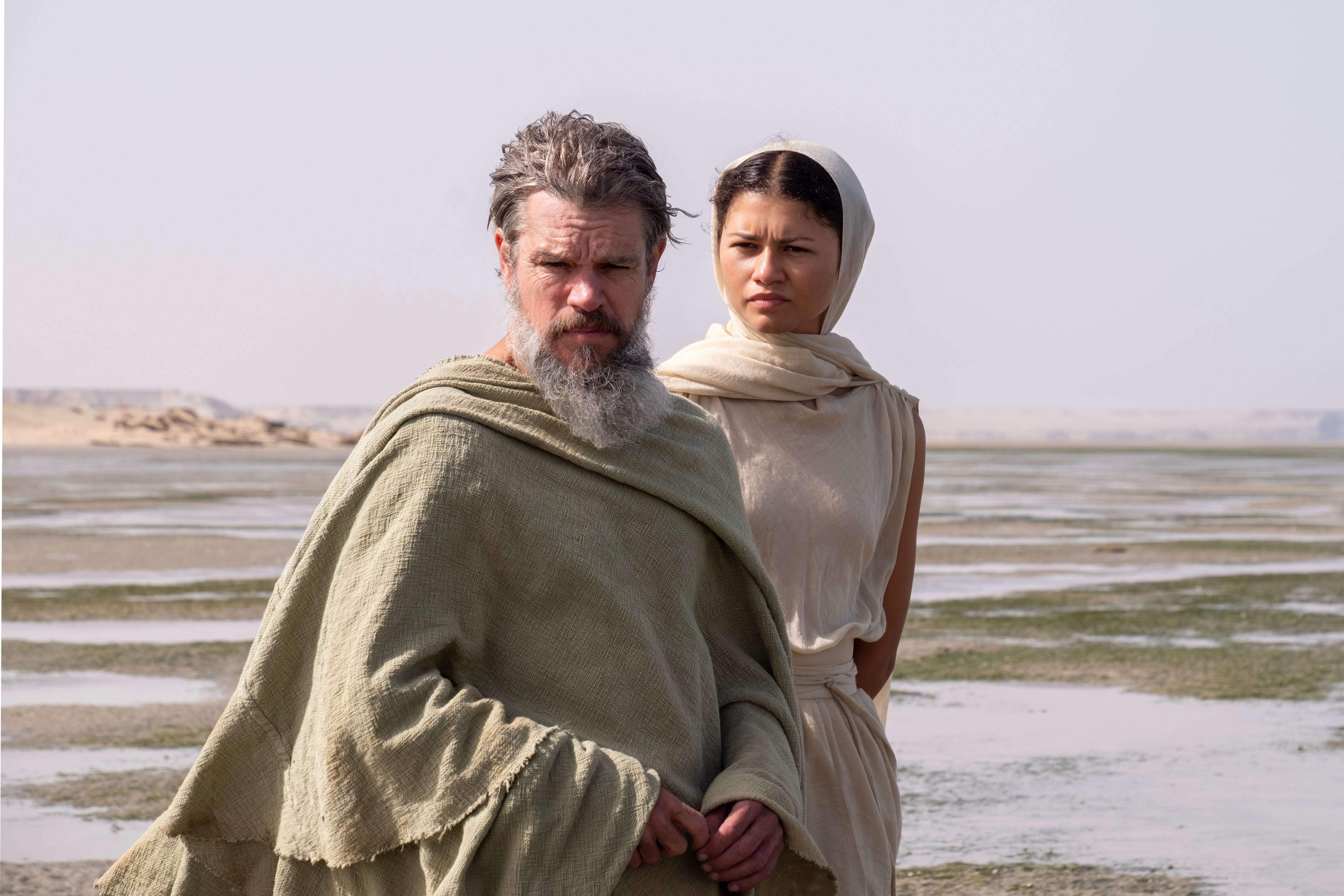
But largely, “The Odyssey” is in line with other Nolan movies – the women are there only to propel the male characters forward. Nyong’o, despite playing two characters and taking the brunt of racist casting backlash, lacks screen time.
Or take Zendaya’s ethereal Athena, the one god seen in Nolan’s adaptation. Athena and Odysseus share a sort of mentor-mentee relationship. She’s upset by the Greeks’ sacking of Troy, but she also guides him along.
But Zendaya’s character is relegated to head-nodding and offering reassurance to Matt Damon’s Odysseus. It’s a far cry from the active role the goddess plays in delivering him home in the book. Lest we forget, it was Athena who petitioned Zeus to allow Odysseus to return. And aside from the obvious appeal of Zendaya and Holland sharing the screen, I wish she appeared to Telemachus and encouraged him to confront the suitors as she did in Homer. Nolan’s “Odyssey” would rather have us believe in the fortitude of men rather than the goddess working behind the scenes.
I find it interesting that Nolan, a director so often criticized for his portrayal of women, specifically cited Emily Wilson’s “Odyssey” translation ahead of the release. The first English edition by a woman is often called “feminist,” using plain descriptors like “women” and “girls” while other male translators have inserted “sluts” and “whores.”
Wilson herself wasn't confident Nolan’s adaptation would be feminist.
“If it’s the usual Nolan plot of 'A guy is on a quest far from home and struggling to get back to an objectified female character,' ” then I’m not sure I see that plot as inherently particularly feminist,” Wilson told Vulture. “‘The Odyssey’ itself is not a female-centered story. Despite having some amazing female actors, I don’t think Nolan’s going to do a female-centered story, either.”
Hathaway at least can add to her list of standout Nolan-directed performances, but at the end of the day, “The Odyssey” isn't doing much more than slotting comfortably into Nolan’s “men on quests” canon.
This article originally appeared on USA TODAY: 'The Odyssey' proves Christopher Nolan still struggles with women
Source: “AOL Entertainment”
